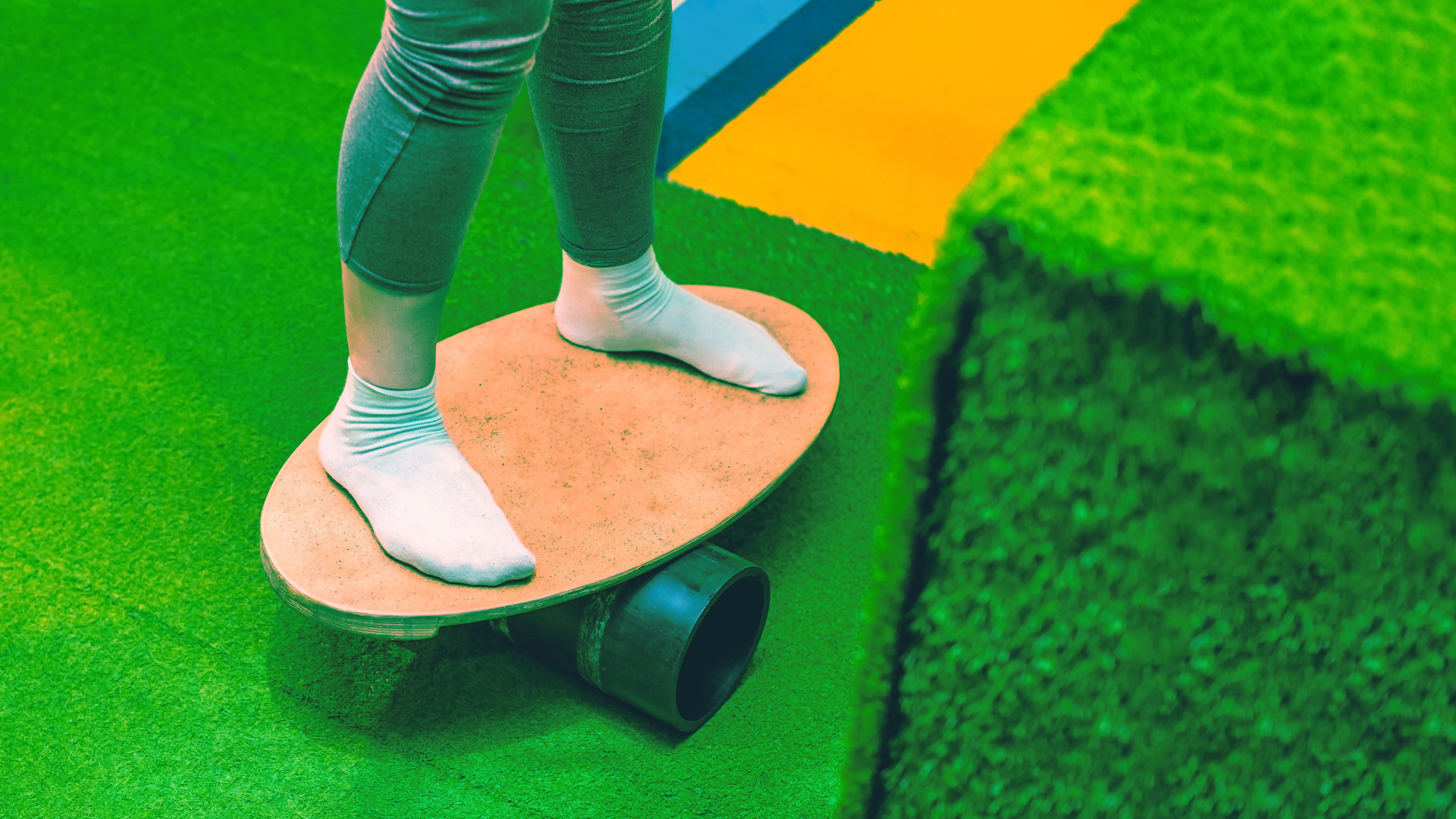
Balance Board Training = Brain Training + ton of other benefits
When a child steps onto a high-quality, their brain shifts into a high-value learning mode: sense → predict → correct → repeat.
That loop is how the nervous system builds skill. It’s the same learning engine kids use to strengthen focus, coordination, confidence, and self-regulation — except on a balance board, the feedback is instant and repetitions happen naturally. Read below to learn more!
-
Confidence, resilience, regulation
Confidence you can measure: Balance boards provide immediate feedback. Kids often feel progress quickly, creating a mastery loop: try → wobble → adjust → succeed.
What this looks like: “I can do hard things.” “I’m learning.” More willingness to participate — especially for kids who’ve felt behind.Emotional regulation through body control: Balance is naturally regulating. Kids learn to slow down, breathe, re-center, and try again because that’s how they succeed on the board. This becomes a practical “in-the-body” practice of self-regulation skills.
Healthy frustration tolerance (resilience): Mistakes are normal on a balance board. Kids practice recovery without shame — building persistence, emotional flexibility, and calmer bounce-back after setbacks.
-
Focus, learning readiness, brain skills
Executive function practice (the brain’s “control center”): Balancing requires attention, monitoring, impulse control, and strategy changes in real time. Kids practice:
“pause and think” ability
follow-through on directions
persistence when something is hard
flexible problem-solving
Attention and memory support through movement: Physical activity supports cognitive outcomes in youth (including attention and memory). Balance training adds a coordination demand that reinforces “organized attention.”
Sensory-motor integration (foundation for organized attention): Balance uses vestibular input (inner ear), vision, and proprioception (body awareness) together. Over time, kids may become more efficient at organizing sensory information and turning it into controlled, purposeful action.
-
What it builds in the body
Stronger postural control and real-world stability: Balance training targets postural control — staying steady during movement and stillness.
What this can look like: steadier stance, smoother movement, better control while running/jumping/turning/landing.“Hidden strength” — stabilizers, joints, and core support: Balance work recruits stabilizing muscles (ankles, hips, core) that don’t always get trained in typical sports or PE.
Translation: kids aren’t just getting stronger — they’re getting more controlled, supporting safer movement patterns.Better body awareness (proprioception): Proprioception is the body’s “GPS.” Balance training constantly feeds this system information, supporting:
smoother coordination
better control of force and movement intensity
improved movement confidence in sports and play
-
What it’s doing to the brain (the “how”)
Sensorimotor learning in real time: Balance training is often described as sensorimotor learning — the brain continuously integrates input and updates “internal maps” for control, coordination, and stability.
Three systems working together (and getting more efficient): The brain combines:
Vestibular input (inner ear: head movement + orientation)
Proprioception (joint/muscle feedback: body position)
Vision (visual tracking and orientation)
The brain “weighs” these inputs moment-to-moment and improves efficiency with practice.
Cerebellum-driven error correction: The cerebellum (a major balance/coordination hub) helps the brain:
predict what will happen next
detect tiny errors (wobble/overcorrection)
adjust motor commands quickly
store improved movement patterns
Plain language: every wobble is information, and the brain gets smarter at stabilizing with practice.
Neuroplasticity (practice changes the brain): Balance skill learning is complex motor learning, which is linked in research to measurable brain-related changes (structure/activation/connectivity) in networks involved in sensorimotor control and visual-vestibular processing.
Note for credibility: much brain imaging research is in adults, but the learning principle (practice-driven adaptation) applies across development.Balance recruits attention networks: Balancing isn’t passive — it requires attention, monitoring, and inhibition (“don’t panic, don’t overcorrect”). Programs combining balance demands with attention tasks have been studied in youth, including executive-function measures.
-
Childhood and adolescence are peak years for building:
sensory integration and body mapping
coordination and postural control
executive function habits (focus, inhibition, flexibility)
confidence through mastery
Balance training is an efficient, engaging way to practice these skills with fast feedback and a built-in motivation loop — kids feel improvement.
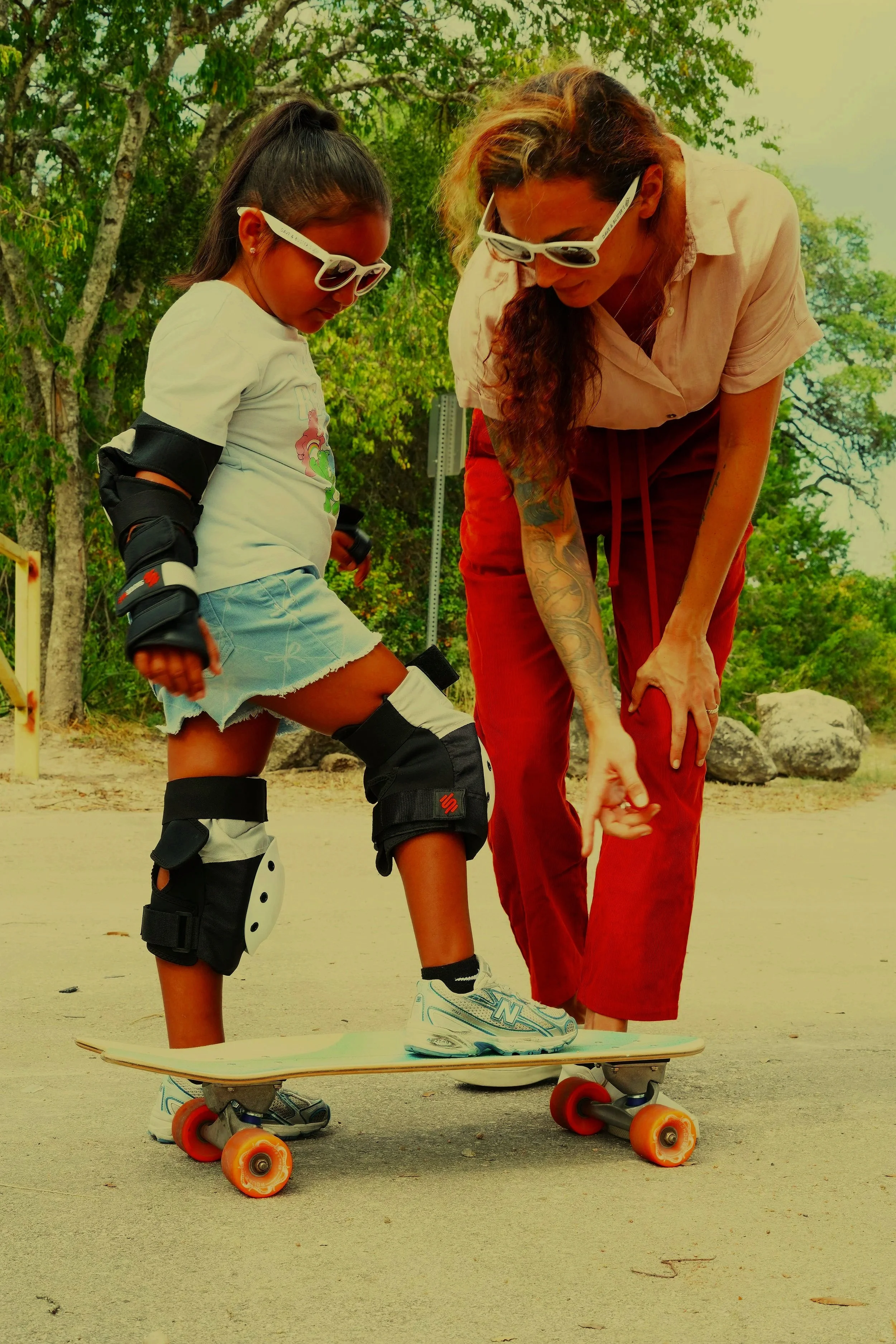
SURFSKATING BENEFITS
Not all youth are interested in looking at their phones and sitting around; and not all youth are interested in the traditional sports that are commonly found at schools and communities.
Surfskating is not skateboarding. There’s a completely different set of body movement involved, and the board’s trucks are engineered to move like a surfboard, not a skateboard. Check out the benefits below to learn more!
-
Physical Benefits
Full-body athleticism: legs, core, hips, posture, and control
Dynamic balance and agility while moving (momentum + turning)
Builds endurance through engaging, repeatable movement patterns
Mental Benefits
Practices executive function in motion: scan → decide → adjust
Rapid motor learning with immediate feedback
Sustained attention because it’s fun, novel, and skill-based
Emotional Benefits
Confidence through visible milestones (stance, carving, stopping, flow)
Resilience by normalizing mistakes as part of learning
Grounding rhythm: carving supports calm, controlled energy
-
More reps + more movement time (less waiting, less bench time)
Balance and coordination skills are carried over into every day life and any other sport
Inclusive participation without tryouts or “ball dominance”
Lower performance pressure; progress is personal, not comparative
Great for kids who don’t thrive in competitive team dynamics
Not ever about “winning” or “losing” but its more personal, and more focused on everyone individually giving their best and improving. More community-inclusive, everyone is skating and learning together, nobody gets all the attention and nobody feels left out, (sometimes that happens in traditional sports unintentionally)
Restorative Sound Immersion (Age-Appropriate) BENEFITS
Check out the benefits below to learn more!
-
Emotional Benefits
Supports calm-down routines and nervous-system settling
Helps kids practice stillness, breath, and self-soothing strategies
Encourages a sense of safety and relaxation in the body
Mental Benefits
Supports recovery after stimulation and improves “reset” ability
Builds interoception (noticing internal cues like breath and tension)
Reinforces mindfulness skills in an accessible way
Social Benefits
Creates a shared moment of quiet connection and respect
Builds classroom-style readiness: calm bodies, quiet focus
Promotes a culture of self-care and self-regulation in the group
-
Always optional and adapted by age group
Consent-based participation (kids can opt for quiet rest instead)
Volume, duration, and instruments are chosen with youth comfort in mind
Social-Emotional Learning (SEL) + Mentorship BENEFITS
Check out the benefits below to learn more!
-
Emotional Benefits
Kids feel seen, supported, and part of something positive
Reduces isolation by creating consistent, welcoming routines
Builds confidence through trusted relationships and encouragement
Social Benefits
Strengthens friendship skills and conflict-repair habits
Promotes inclusion, kindness, and peer support
Helps kids practice leadership and community contribution
Why It Matters
Healthy development isn’t just skills — it’s belonging
Connection is a protective factor for youth well-being and resilience
Community Connection (Belonging + Positive Peer Culture)
Check out the benefits below to learn more!
-
Emotional Benefits
Kids feel seen, supported, and part of something positive
Reduces isolation by creating consistent, welcoming routines
Builds confidence through trusted relationships and encouragement
Social Benefits
Strengthens friendship skills and conflict-repair habits
Promotes inclusion, kindness, and peer support
Helps kids practice leadership and community contribution
Why It Matters
Healthy development isn’t just skills — it’s belonging
Connection is a protective factor for youth well-being and resilience
Creative Expression (Art + Creativity) BENEFITS
Check out the benefits below to learn more!
-
Emotional Benefits
Provides a safe outlet for self-expression and identity-building
Builds pride through creating something tangible
Encourages calm focus and decompression after movement
Mental Benefits
Practices planning, sequencing, and follow-through
Strengthens attention and creative problem-solving
Reinforces reflection (“what did I learn today?”) in kid-friendly ways
Social Benefits
Encourages sharing, positive feedback, and community
Helps quieter kids participate and be seen without pressure
Builds connection through collaborative or themed projects
Why It Matters
Creativity supports the “whole child,” not just performance
Pairs perfectly with movement for a balanced, integrated session
DISCLAIMER:
KV33 Swell programs are educational and wellness-based and are not medical treatment, therapy, or a substitute for professional healthcare. We do not diagnose, treat, or cure any condition. Research on physical activity and coordination-based training suggests potential benefits for balance, cognitive skills, and well-being; individual results vary.