The Neuroscience of Balance Board Training: How Improved Equilibrium Boosts Youth Brain Development
# The Neuroscience of Balance Board Training: How Improved Equilibrium Boosts Youth Brain Development
![[HERO] The Neuroscience of Balance Board Training: How Improved Equilibrium Boosts Youth Brain Development](https://cdn.marblism.com/drGr3kZueCZ.webp)
**Meta Description:** Discover how balance board training supports youth brain development, focus, and body awareness. Learn the science behind this powerful tool, now available in Austin and Central Texas.
**Slug:** balance-board-training-youth-brain-development-austin
---
You've probably noticed it. Your child comes home from school, and their body is buzzing, but not in a good way. They're restless. Unfocused. Maybe a little dysregulated. Screen time hasn't helped. Sports feel too competitive. And the usual "go play outside" advice doesn't quite land the way it used to.
Here's the thing: their brain is craving something specific. Not more stimulation. Not more sitting. But **purposeful movement that challenges their balance and engages their whole body.**
That's where balance board training comes in, and the science behind it is genuinely fascinating.
At **KV33 Swell**, we incorporate balance board training into our mobile youth wellness programs across **Austin, Cedar Park, Leander, Round Rock, West Lake Hills**, and surrounding Central Texas communities. It's not about becoming an elite athlete. It's about giving young brains the input they need to focus, regulate, and thrive.
Let's break down what's actually happening in the brain when a kid steps onto a balance board, and why it matters more than you might think.
---
## What Is Balance Board Training, Exactly?
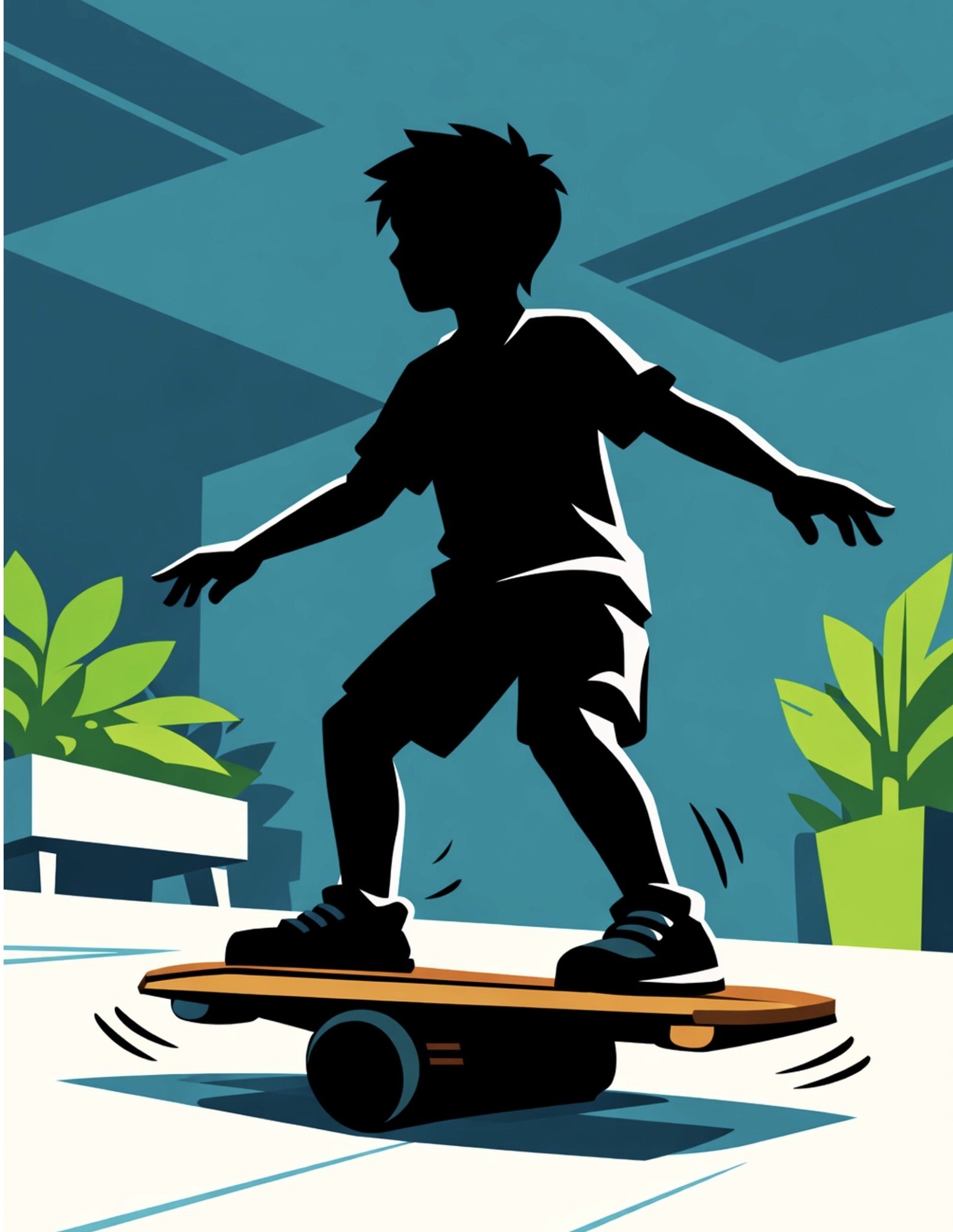
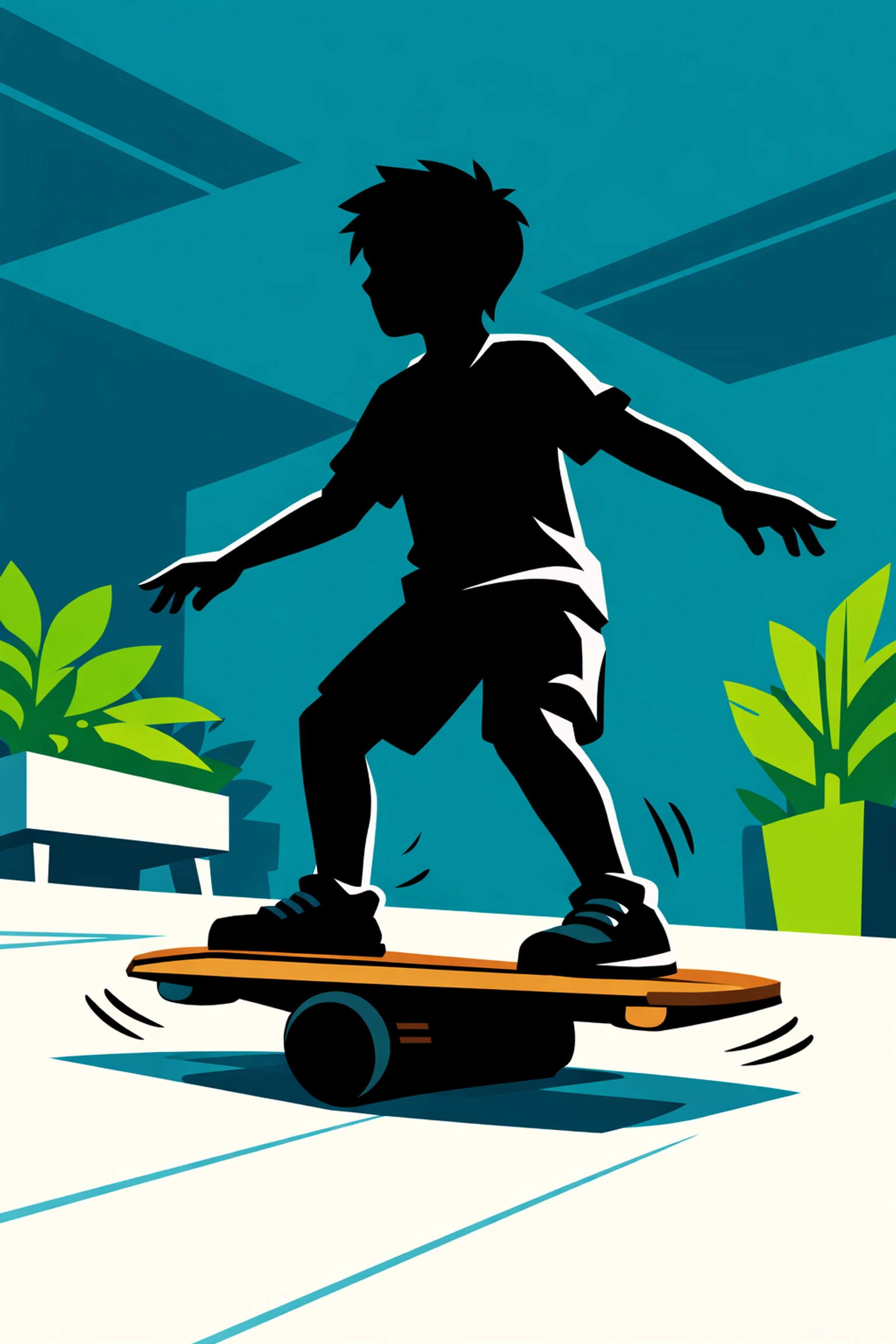
Balance board training involves standing, shifting weight, and maintaining stability on an unstable surface. The board rocks, tilts, or wobbles, and the body has to constantly adjust.
It sounds simple. And physically, it is beginner-friendly. But neurologically? It's incredibly rich.
Every micro-adjustment your child makes on a balance board sends a cascade of signals through their nervous system. Their brain is working hard, processing sensory information, coordinating muscles, and making real-time decisions about how to stay upright.
**This isn't passive movement. It's active, whole-body engagement.**
And for kids who struggle with focus, body awareness, or emotional regulation, that kind of engagement can be transformative.
---
## The Brain Systems at Work: A Quick Neuroscience Primer
You don't need a neuroscience degree to understand why balance training supports brain development. But a little context helps.
Three key systems are involved:
### 1. The Vestibular System
Located in the inner ear, the vestibular system detects head position and movement. It's constantly sending signals to the brain about where the body is in space.
When a child stands on a balance board, the vestibular system gets activated in a big way. Every wobble, tilt, and correction provides input that helps the brain calibrate spatial awareness.
**Why it matters:** The vestibular system is connected to attention, arousal, and emotional regulation. Stimulating it through balance activities can support alertness and calm, at the same time.
### 2. Proprioception
Proprioception is sometimes called the "sixth sense." It's the body's ability to sense its own position through receptors in muscles, tendons, and joints.
Balance board training challenges proprioception constantly. The brain has to process where the feet are, how the ankles are adjusting, and what the core is doing, all without looking down.
**Why it matters:** Strong proprioceptive awareness helps kids feel grounded in their bodies. It can support coordination, reduce clumsiness, and improve overall body confidence.
### 3. The Cerebellum
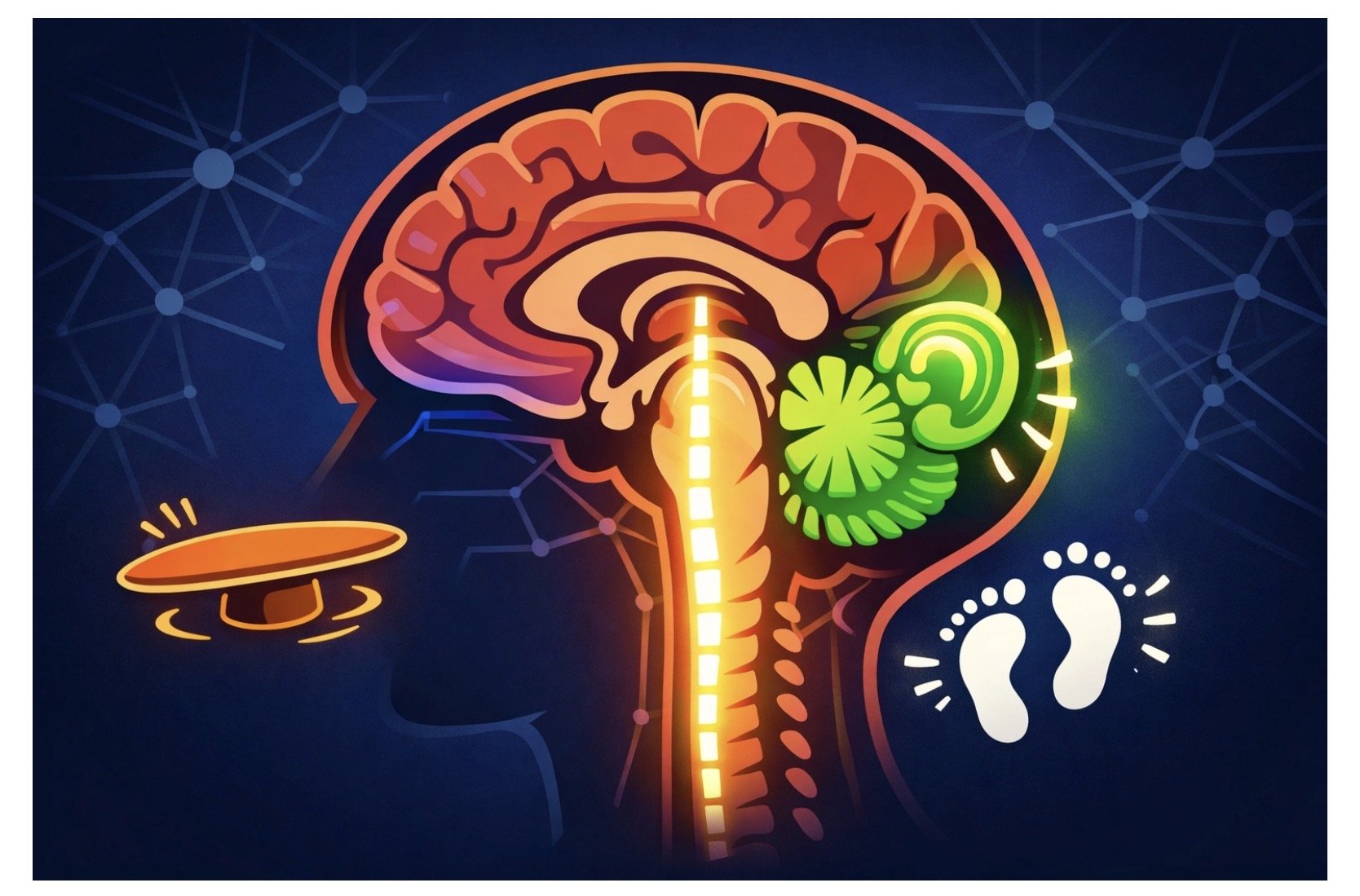
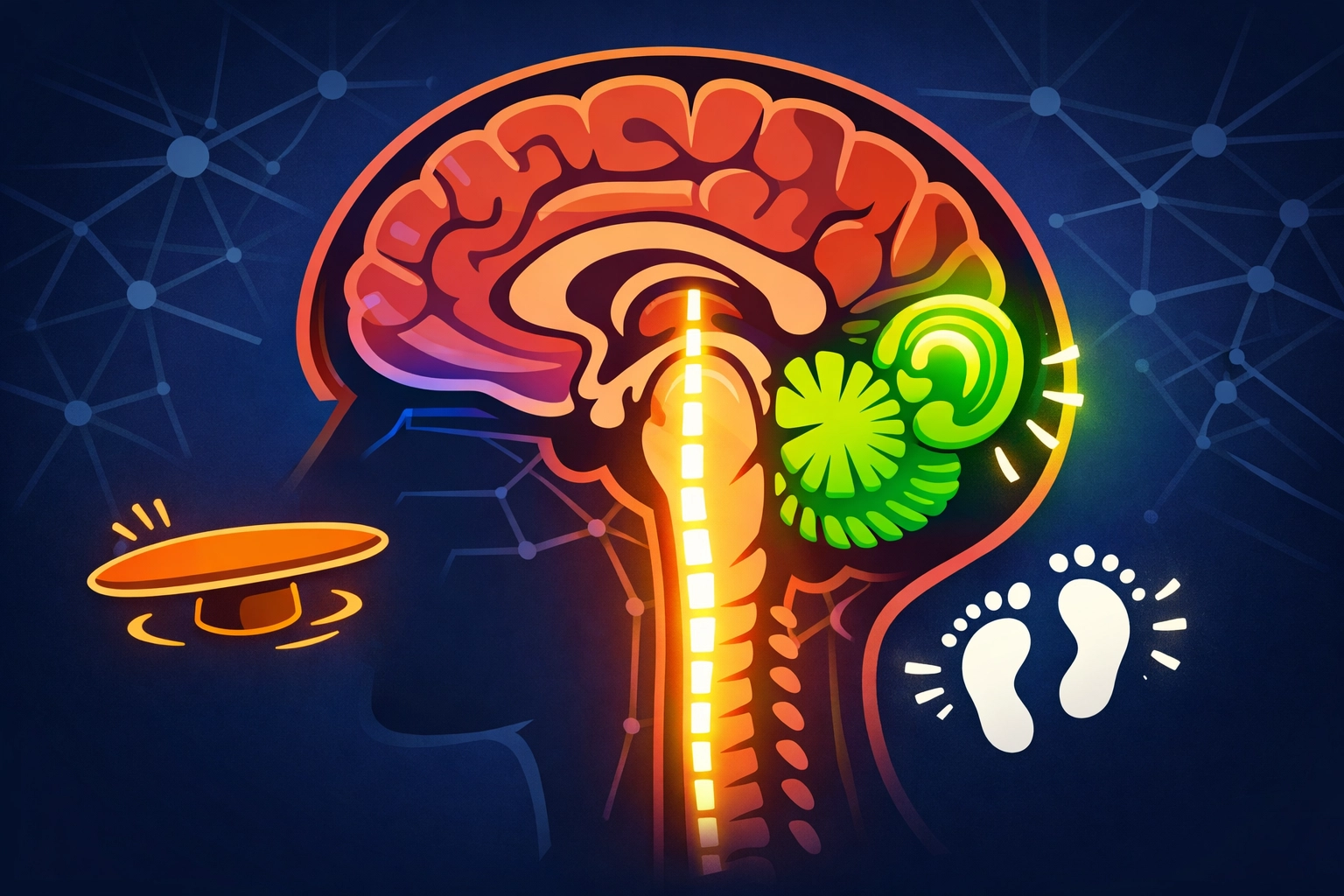
The cerebellum is the brain's coordination center. It represents only about 10% of brain volume but contains roughly 50% of all neurons. It fine-tunes movement, processes sensory feedback, and helps the body move smoothly.
Balance training gives the cerebellum a workout. The constant adjustments required on an unstable surface strengthen the neural pathways involved in motor control.
**Why it matters:** A well-developed cerebellum supports not just physical coordination, but also cognitive functions like attention and working memory.
---
## How Balance Training May Support Youth Brain Development
Let's be clear: balance board training isn't a cure for anything. It's not therapy. It's not a medical intervention.
But research suggests that consistent balance challenges can support several areas of development in children and teens. Here's what the evidence points toward:
### Enhanced Focus and Attention
The vestibular system is closely connected to the brain's reticular activating system, the network responsible for maintaining alertness and attention. Stimulating the vestibular system through balance activities may help kids feel more awake and focused.
**What parents often report:** "My child seems calmer and more present after balance-based activities."
### Improved Coordination and Motor Control
This one is intuitive. The more a child practices balance, the better their brain gets at coordinating movement. Neural pathways strengthen. Reaction time improves. Movements become smoother and more controlled.
**What this looks like:** Fewer trips and falls. More confidence in physical activities. Greater willingness to try new things.
### Support for Emotional Regulation
Here's where it gets interesting. Movement and emotion are deeply connected in the brain. Rhythmic, whole-body movement, especially movement that requires focus, can help shift the nervous system from a stressed state to a calmer one.
Balance board training, when done in a supportive environment, can offer kids a way to regulate their bodies and, by extension, their emotions.
**Important note:** This is not a replacement for mental health support. KV33 Swell is not a licensed mental health provider. But we do incorporate trauma-aware practices and create environments designed to support regulation and connection.
### Better Spatial Reasoning
Balance training develops the brain's ability to think in three dimensions. Kids who practice balance often show improvements in spatial reasoning, a skill that supports everything from math to navigation to creative problem-solving.
---
## How KV33 Swell Incorporates Balance Board Training
At KV33 Swell, balance board training isn't a standalone activity. It's woven into our **SwellSync™ Framework**, a structured approach to youth wellness that combines movement, creative expression, SEL mini-lessons, and optional sound-based calming.
Here's how balance training fits in:
### The RESTORE Track
The **RESTORE** track focuses on regulation, breath, and calming. Balance board work is often paired with breathwork and gentle movement to help kids shift from a dysregulated state to a grounded one.
A typical RESTORE session might include:
- Slow, intentional balance board practice
- Guided breathing while maintaining stability
- Optional sound immersion for deeper calm (ages 9+)
### The HARMONY Track
The **HARMONY** track emphasizes connection, teamwork, and confidence. Balance board activities in this track are often partner-based or group-based: building trust and communication alongside physical skills.
**What this looks like:** Kids might work in pairs, one on the board and one spotting. They practice giving and receiving support. They celebrate each other's progress.
Both tracks are designed to be **beginner-friendly**. No prior experience is needed. We bring all gear and safety equipment directly to schools, rec centers, and community spaces across **Austin, Pflugerville, Manor, Kyle, Buda, Dripping Springs**, and beyond.
---
## Who Is Balance Board Training For?
**Ages 5–17.** We adapt sessions based on developmental stage and comfort level.
For younger kids (5–8), balance board work is playful and exploratory. We focus on body awareness, confidence, and having fun with movement.
For tweens and teens (9–17), we layer in more challenge: plus optional sound immersion and deeper SEL content. The goal is to build both physical skills and emotional tools they can use off the board.
**No experience required.** Truly. Our programs are designed for beginners. We meet kids where they are.
---
## Serving Austin and Central Texas
KV33 Swell is a **mobile, founder-led** program. We bring balance board training: and our full SwellSync™ programming: directly to your community.
**Current service areas include:**
- Austin (including South Austin, East Austin, North Austin)
- Cedar Park
- Leander
- Round Rock
- Pflugerville
- West Lake Hills
- Lakeway
- Bee Cave
- Kyle
- Buda
- Manor
- Dripping Springs
- Georgetown
- Hutto
- San Marcos
- Bastrop
We serve **Travis County, Williamson County, Hays County**, and parts of **Bastrop County**.
If you're a parent in any of these areas: or a school administrator, city recreation director, or nonprofit leader: we'd love to connect.
**[Book a Call](https://www.kv33swell.org)** to learn more about bringing balance-based programming to your community.

---
## What Makes KV33 Swell Different?
A few things set our approach apart:
- **Founder-led delivery.** Every session is facilitated by our founder, ensuring consistent quality and a trauma-aware approach.
- **Mobile model.** We come to you. No need to transport kids to a special facility.
- **Safety-forward.** We bring all balance boards, safety gear, and equipment. Small group sizes ensure personalized attention.
- **Privacy-first.** We do not post real-time locations or share photos of children's faces by default. Your child's privacy matters.
- **Holistic framework.** Balance training is part of a larger system that includes creative expression, SEL, and optional sound immersion.
---
## Frequently Asked Questions
### What ages do you serve?
We work with youth ages 5–17. Sessions are adapted based on age and developmental stage.
### Do kids need prior balance board experience?
Not at all. Our programs are designed for beginners. We meet every child where they are.
### What safety gear do you provide?
We bring helmets and other protective equipment as needed. All gear is sanitized and maintained.
### Where do you offer programs?
We serve Austin and surrounding Central Texas communities, including Cedar Park, Leander, Round Rock, Pflugerville, Kyle, Buda, West Lake Hills, Lakeway, and more. We operate across Travis, Williamson, Hays, and Bastrop Counties.
### What's the class size?
We keep groups small: typically 6–12 participants: to ensure quality facilitation and individualized support.
### Is this therapy or a licensed mental health service?
No. KV33 Swell is not a licensed mental health provider. We offer wellness programming that supports regulation, confidence, and connection: but we do not diagnose or treat mental health conditions.
### How can I request a session or pilot program?
**[Request a Pilot](https://www.kv33swell.org)** through our website. We'll follow up to discuss your needs, location, and scheduling.
### How can I support KV33 Swell's mission?
You can **[Donate](https://www.kv33swell.org)** or **[Sponsor a Series](https://www.kv33swell.org)** to help bring programming to underserved youth across Central Texas.
### Do you offer programming for schools?
Yes. We partner with schools for enrichment days, SEL support, after-school programs, and campus wellness events. **[Bring KV33 to Your School](https://www.kv33swell.org)** to learn more.
### What does sponsorship fund?
Sponsorship supports equipment, safety gear, scholarships for underserved youth, program delivery, and trauma-aware facilitation training.
---
## How to Get Started
**Step 1:** Explore our programs at [kv33swell.org](https://www.kv33swell.org).
**Step 2:** **[Book a Call](https://www.kv33swell.org)** to discuss your goals: whether you're a parent, school administrator, or community partner.
**Step 3:** Schedule your first session or pilot program. We handle the rest.
---
## The Bottom Line
Balance board training isn't magic. But it is a powerful, evidence-informed tool for supporting youth brain development: when delivered in a safe, supportive environment.
At KV33 Swell, we've seen what happens when kids get consistent, purposeful movement. They stand taller. They focus longer. They feel more at home in their bodies.
If you're looking for a **youth wellness program in Austin** that goes beyond traditional sports and screens: one that actually engages the brain and body in meaningful ways: we'd love to be part of your child's journey.
**[Host a Class](https://www.kv33swell.org)** | **[Request a Pilot](https://www.kv33swell.org)** | **[Donate](https://www.kv33swell.org)**
---
## Internal Link Suggestions
1. "Learn more about our SwellSync™ Framework"
2. "Explore our RESTORE Track for calming and regulation"
3. "See how we support schools with SEL enrichment"
4. "Read our parent guide to youth programs in Austin"
5. "Discover our safety and gear standards"
6. "Meet our founder and mission"
7. "View sponsorship opportunities"
8. "Explore our service area in Central Texas"
---
## CTA Button Copy Options
1. Request a Pilot
2. Book a Discovery Call
3. Bring KV33 to Your School
4. Host a Community Class
5. Sponsor a Series
6. Donate to Support Access
7. Join a Public Class
8. Schedule a Site Visit
9. Partner with KV33 Swell
10. Learn More About Our Programs